01
Research the accounts
Accounts · leads · deals
Brain
Al
Byerley
Supernova's agents
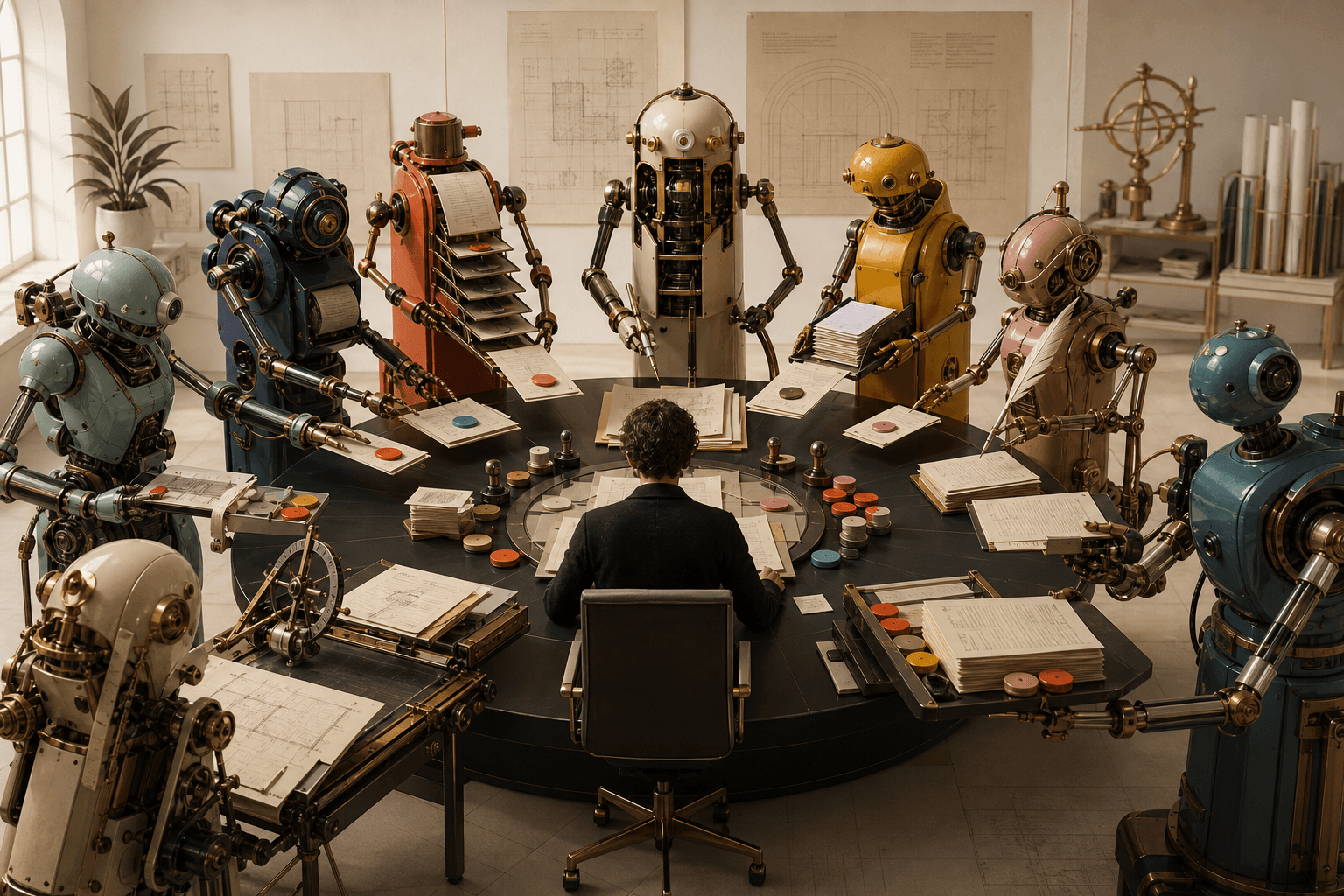
Supernova brings project documents, client conversations and delivery plans into one workspace. AI agents use those records to draft specifications, plans and updates for your team to review. The roster contains 48 available agents and 1 retired agent. Explore what each reads and produces below.
An example of the work
48 available agents. People review the results.
Responsible for this step
Jane
Jane reads a discovery-call transcript and drafts the proposed scope, effort and milestones. A person reviews the proposal before sharing it with the client.
What you get
The team has a proposal to review.
Responsible for this step
Tony
Tony reads proposals and signed agreements to identify product areas and requirements. The technical lead checks the extracted scope against the documents.
What you get
The agreed work becomes a structured starting point.
Responsible for this step
Andrew
Andrew uses the client documents and product requirements to describe the people using the product, their needs and responsibilities.
What you get
The team can check who each feature serves.
Responsible for this step
Powell
A separate agent, Elvex, drafts use cases. Powell compares those drafts with their source documents and flags unsupported claims or scope gaps. This check supports the human review; it does not guarantee correctness.
What you get
The reviewer can see what needs attention.
Responsible for this step
Reviewer
The reviewer can approve, return or correct a draft. Project review records show the decision so the team can see what was accepted and by whom.
What you get
The team knows which plan it can use.
Two teams of available agents
Sales agents help research customers and draft proposals. Delivery agents help turn agreed requirements into plans, designs and tests. Both use the project records available to them.
The operating map
These examples group selected agents by job. They are not a fixed sequence or the full roster; a project uses the steps it needs.
Research the accounts, sum up the day, then turn what the company knows into a next step.
Accounts · leads · deals
Briefing · scrum
Reply · proposal · answers
Each agent has a specific task, such as drafting a proposal or checking a use case.
Agent tools use access checks. Ask about the permissions configured for your team.
Generated plans have expected fields so teams can review and reuse them.
Review generated work before accepting it or sharing it with a client.
Generation limits help stop work that runs too long or returns incomplete results.
Run and approval records help teams inspect how a result was produced.
The complete roster
Search by name, job, input or output. Counts include retired agents, which are labelled separately.
Discover features from code
create-code-use-cases
Named after Hari Seldon — Foundation.
Explain an implemented feature in detail
decorate-code-use-case
Named after Dors Venabili — Prelude to Foundation.
Define user permissions
generate-roles
Named after R. Daneel Olivaw — The Caves of Steel.
Describe the people using the product
generate-personas
Named after Andrew Martin — The Bicentennial Man.
Map the product data
generate-ontology
Named after QT-1 — Reason.
Describe how features should work
generate-use-cases
Named after Elvex — Robot Dreams.
Map user journeys
generate-journeys
Named after SPD-13 — Runaround.
Extract the agreed product scope
generate-interfaces
Named after TN-3 — Satisfaction Guaranteed.
Break requirements into stories
generate-backlog
Named after Robbie — Robbie.
Plan developer tasks
generate-dev-tasks
Named after DV-5 — Catch That Rabbit.
Answer questions about a project plan
analyze-ask-plan
Named after HRB-34 — Liar!.
Propose changes from feedback
analyze-cascade-feedback
Named after R. Giskard Reventlov — Robots and Empire.
Classify scope for estimation (retired)
estimate-scope
Named after Susan Calvin — I, Robot.
Match scope to known features
match-features
Named after Elijah Baley — Mirror Image.
Find unanswered scope questions
interrogate-scope
Named after Peter Bogert — Liar!, Little Lost Robot.
Extract project milestones
extract-milestones
Named after EZ-27 — Galley Slave.
Prepare project kickoff documents
generate-handoff-artifacts
Named after The Bard — Someday.
Prepare a review knowledge check
generate-stage-quiz
Named after LNE — Lenny.
Research a client account
antino3-accounts
Named after The Brain — Escape!.
Research a potential customer
lead-research
Named after AL-76 — Robot AL-76 Goes Astray.
Review a sales opportunity
deal-research
Named after Stephen Byerley — Evidence.
Answer a question about a deal
deal-chat
Named after Sammy — The Caves of Steel.
Prepare a salesperson’s daily briefing
antino3-home
Named after Multivac — The Last Question.
Summarise daily team calls
scrum-digest
Named after NS-2 — Little Lost Robot.
Draft a follow-up reply
draft-writer
Named after Cal — Cal.
Draft a client proposal
generate-proposal
Named after JN-5 — Feminine Intuition.
Write a project case study
generate-case-study
Named after Susan Calvin — I, Robot.
Answer questions from company records
ask-antino
Named after Norby — Norby, the Mixed-Up Robot.
Suggest a visual direction
generate-design-from-moodboard
Named after Max — Light Verse.
Build design guidelines
generate-design-system
Named after Madarian — Feminine Intuition.
Propose lessons from review corrections
distill-lessons
Named after Mike Donovan — Runaround, Reason, Catch That Rabbit.
Check a generated use case
verify-artifact
Named after Gregory Powell — Runaround, Reason, Catch That Rabbit, Liar!.
Create a clickable prototype
generate-mock
Named after R. Jander Panell — The Robots of Dawn.
Explain how similar work was delivered
capability-precedent
Named after The Mentors — the Norby Chronicles.
Draft test cases
generate-test-cases
Named after The JG series — “…That Thou Art Mindful of Him”.
Run tests and report failures
execute-test-cases
Named after Gerald Black — Little Lost Robot, Risk.
Revise part of a case study
edit-case-study-block
Named after Alfred Lanning — I, Robot.
Draft a first contact message
lead-draft-writer
Named after Rodney — Christmas Without Rodney.
Identify plans affected by a change
cascade-judge
Named after Kallner — Feminine Intuition.
Group reviewer notes
cascade-seeder
Named after Dr Wendell Urth — the Wendell Urth mysteries.
Builds the product vocabulary from the code's own identifiers, and groups the candidate terms so a human can accept or reject a lexicon rather than a word list.
code-vocabulary-agent
Named after Ebling Mis — Foundation and Empire.
Sweeps a whole indexed repository for product capabilities, then consolidates the per-area findings into one non-overlapping candidate set.
project-code-discovery
Named after Arkady Darell — Second Foundation.
Frames raw code findings as product use cases — the step from what the repository contains to what the product does.
frame-project-use-cases
Named after Gaal Dornick — Foundation.
Expands a code-backed use case along its complete call chains — the body pass, the scenario pass and the review pass that checks each against the source it claims.
code-use-case-expansion
Named after Yugo Amaryl — Prelude to Foundation.
Works one exact operation at a time in four phases — create, decorate, verify, repair — so a claim about the code is checked and mended rather than restated.
code-operation-agent
Named after Dr Han Fastolfe — The Robots of Dawn.
Writes the product-level description of a code area from its stored symbols and chains, preserving the prose a human has already approved.
code-product-agent
Named after Janov Pelorat — Foundation's Edge.
Names one cluster of resolved call chains from the evidence in the cluster itself — a feature-level label a person can recognise.
name-call-chain-cluster
Named after Bayta Darell — Foundation and Empire.
Turns a complete call-chain cluster into detailed user stories, each citing the chains that evidence it.
extract-cluster-stories
Named after Salvor Hardin — Foundation.
Reviews generated code against the story it claims to implement, binding each review to the exact output it read.
review-code-generation
Named after Dr Vasilia Aliena — Robots and Empire.
The important part
AI output can contain mistakes. Use the source records, checking results and your team’s review process to decide what to accept.